
Paul Belluomini's Journal

Home Page: Paul Belluomini

Pittsburgh, Pittsburgh, USA
| Total Posts: 4 | Latest Post: 2023-04-14 |
| Table of Contents | RSS Feed |
This all started when I first read about the UK company Frontline and their updated and improved versions of the MGB. At first it was the LE-50 MGBGT and then the focus of this journal, the Abingdon Edition of the MGB roadster. I really wanted one but I did not want to fork up the cost of the car. After perusing many websites and using my knowledge gained by owning and fixing many MGB through the years I decided to create my own Abingdon Edition MGB. I purchased a rust free 1977 MGB from ebay for $2500. The car was in a garage in Michigan but had spent most of it's life in Arizona. The body was great, no rust, no accidents and had never been taken apart. The interior was toast due to the sun bake of Arizona. The mechanicals were in need of repairs and updates. In other words a perfect candidate for a transformation into something restomod, my Abingdon MGB!
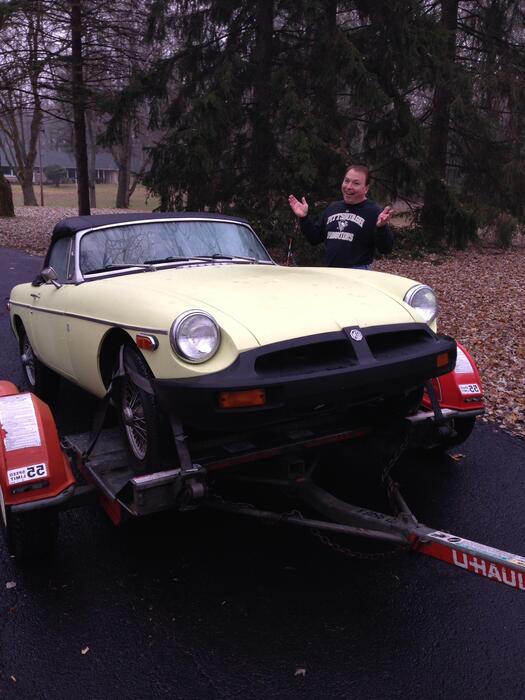
The MGB was purchased and trailered home to Pittsburgh where I live. It sat for two years while I completed a restoration of a TR250.
I began to formulate a plan. First, complete teardown of the car to a rolling shell. Have the car body modified to chrome bumpers and respray the car to new color. Update the front and rear suspension using Frontline MG components. Increase performance by updating the driveline to include a 5 speed and a crossflow head with dual webers. Use a backdated wiring loom to get rid of many trouble areas with the later wiring harnesses. Install updated and improved seats and interior trim. I will break each of these down in the following journal posts with pictures. It took me a few years to complete but the B turned out great, it handles well, is very quick, and is comfortable to drive.
The MGB was purchased and trailered home to Pittsburgh where I live. It sat for two years while I completed a restoration of a TR250.
I began to formulate a plan. First, complete teardown of the car to a rolling shell. Have the car body modified to chrome bumpers and respray the car to new color. Update the front and rear suspension using Frontline MG components. Increase performance by updating the driveline to include a 5 speed and a crossflow head with dual webers. Use a backdated wiring loom to get rid of many trouble areas with the later wiring harnesses. Install updated and improved seats and interior trim. I will break each of these down in the following journal posts with pictures. It took me a few years to complete but the B turned out great, it handles well, is very quick, and is comfortable to drive.

Picture 187

Picture 188

Picture 190

Picture 196

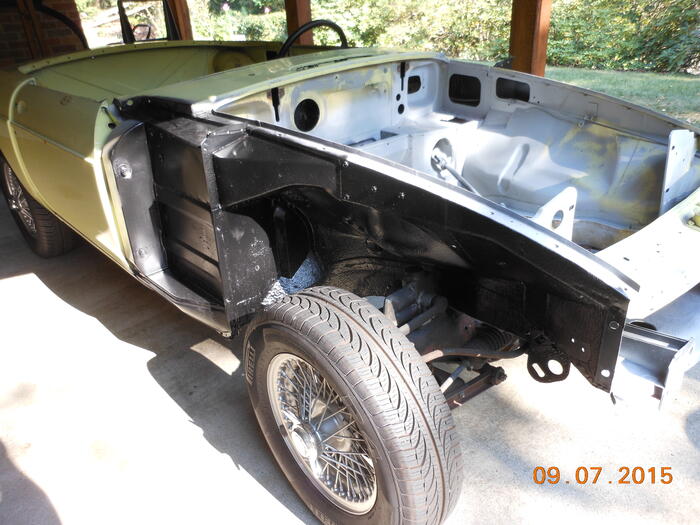
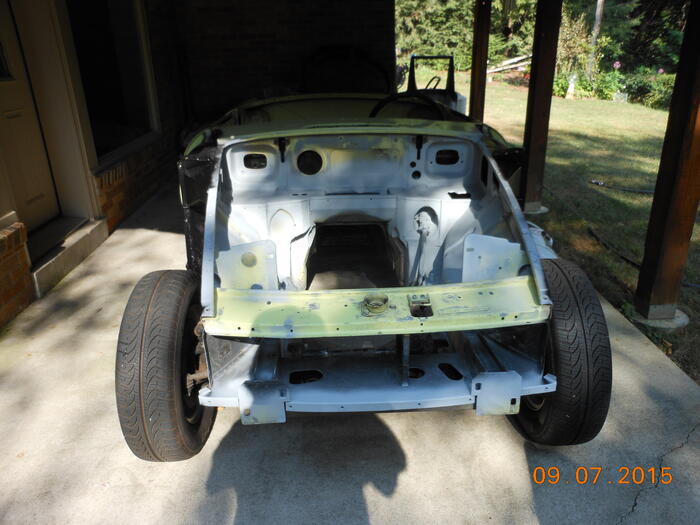
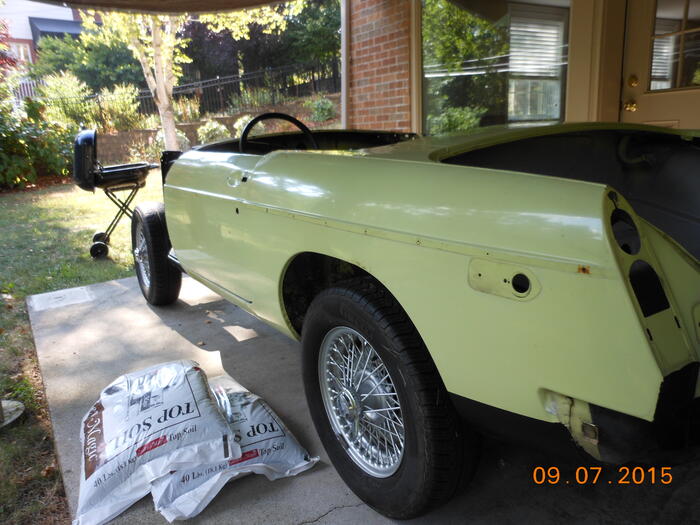
This is my second installment of my attempt to build a poor mans Abingdon Edition MGB. I purchase a rust free 1977 MGB through ebay. The price was quite reasonable at $2200. The car was originally sold in Arizona where it remained for many years before being brought north to Chicago. There it was stored in a garage and only driven in warmer months. I wanted to get a chrome bumper car, but rust free ones are hard to find and much more costly. So the car was purchase and towed back to my home in western Pa where in underwent a full teardown. Upon teardown the car was as I thought- there were nicks, scratches dings and dirt. But zero rust! It was the first time that I did not have to use penetrating oil or a torch to disassemble an old British car. Most bolts, nuts and screws removed using fingers after loosening them with a wrench.....it was easy! I removed the interior and trashed most of it as the sun had taken it's toll- all dried out. Out came the wiring harness, dashboard, windows and regulators, windshield, door locks and all other trim parts. I pulled the engine and trans, removed the radiator and cooling system, removed the gas tank, hydraulic and fuel lines. All the lights, bumpers and exterior trim were now gone. I left the rear axle and front suspension with steering so I could move the now empty shell around my garage as needed. I also removed the front fenders, hood, trunk lid and doors to make access to the interior and other panels easier. Upon inspection it was a nearly prefect rust free MGB shell that did not need any panel repaired or replaced. I di find one mice nest in the heater area though, all that remined were dried out skeletons.
I began to formulate a plan on how to advance with my project
I began to formulate a plan on how to advance with my project
image[1]
Picture 576
Picture 575
Picture 578
Member Comments on Journal Entry: Abingdon Edition Build Gets Underway - Part 2 ↵
No comments have been posted yet...
Want to leave a comment or ask the owner a question?
Sign in or register a new account — it's free
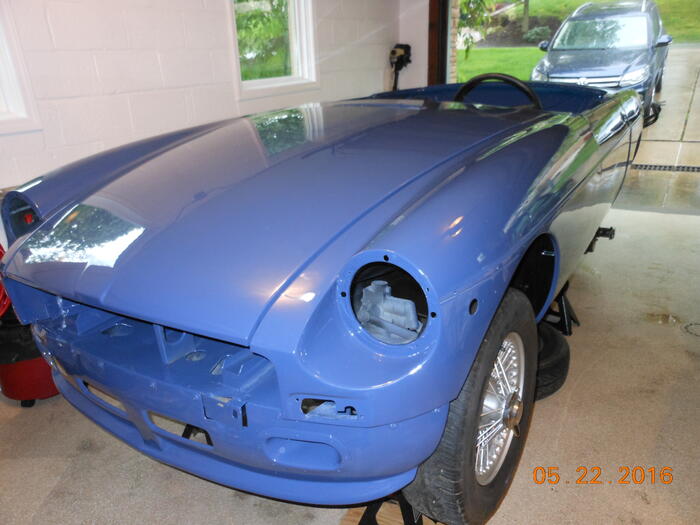
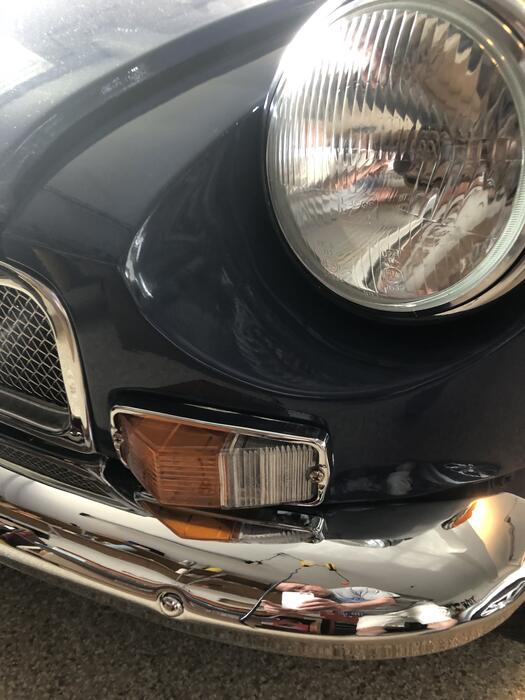
In the last post the MGB had been torn down into it's separate components. I do not do body work or paint so the rolling shell was shipped off to a friend who is retired body man who also likes and appreciates British and American. He modified the front fenders and radiator area to allow for the installation of a chrome bumper conversion kit. The most difficult part of the conversion is the modification of the front fenders to allow installation of the original style turn signals. The kit is pricey from Moss Motors so I purchased a kit from England that includes all the parts except the bumpers and the grille. The kit was purchase from Ebay UK for around $120.00. I then purchased the bumpers and grille from various sources when they went on sale to keep the cost down. The conversion parts were trial fitted and then installed. I also bought a Frontline front valence/airdam from Moss when it was on sale, this was fitted to the car and sprayed to match. While the car was being prepped for paint I took the time to clean and then polish all the trim to renew it's appearance. For the chrome trim 0000 steel wool and brillo pads with lots of soapy water brought back the shine to the chrome parts. I then used chrome polish and buffed the parts to make them look like new again. The body was resprayed using MG Mineral Blue -used on 1965 to 1969 - MGBs. The paint turned out beautiful and the doors, boot lid, and bonnet were added and fitted. I then began adding back all of the trim parts , hydraulic lines, fuel lines, window regulators and gaskets and seals.
Please be aware that I took hundreds of pictures during the disassembly to aid me in reconstructing the car. It is impossible to remember exactly where all the various parts go and the routing of brake lines etc. The pictures made the job much easier. I also purchased all new rubber trim parts. I actually purchased duplicate rubber parts from Moss and the Roadster Factory. I had discovered earlier when rebuilding a TR250 that the various vendors supply slightly different parts from different suppliers and they do not fit the same or have the same appearance. I ended up using some of the rubber and body gasket parts from Moss and some from the Roadster Factory. If I could locate and buy NOS rubber parts I did but there is not much available nowadays. The new reproductions are not quite as well made and do not fit perfectly and require some mods or adjustments. The hardest part was the windshield. The Cadmium finish on the frame was in poor condition and the gaskets had expired. I disassembled the windshield completely, the glass was original and nearly perfect so that was retained for later reuse. Since getting the frame replated seemed impossible ( I could not locate anyone interested in doing it! ) I sent the windshield frame out to be polished by a company called Mirror Finish Polishing located in Missouri. The did a great job and returned it to me well packed. It looks like chrome now but not quite as shiny and goes well with the chrome window frames and the rest of the chrome on the body. I put the windshield back together using new gaskets, screws and rivets. The gasket between the glass and frame was easy. The gasket that is between the frame and body was a real pain to install. I had two gaskets - MOSS and Roadster Factory - they were quite a bit different. I ended up using the one from Roadster Factory, it was wider and I thought it fit better. Before installing the windshield I replaced the vinyl cloth trim that sits below the windshield on top of the cowl. This had expired due to the sun and I had saved the original to use as a template. I bought new black material from Moss and cut and glued the new one into place.
After completing the trim cloth I installed the assembled windshield into place. The big problem was that the windshield does not want to lie flat on the cowl area and the gasket is curled under the frame. It seems that after looking online it usually requires many people to accomplish this install. I enlisted my ever patient wife to assist me. Using only one bolt on each side allowed me to get things started. the windshield had to pushed downward and the top of the frame needed to be pushed towards the front of the car which would pivot it and flatten the gasket. The problem was we could not do both at the same time so I decided to use ratchet straps to assist. I hooked one end of each strap to the top corners of the windshield and the other end to brackets on the wall of my garage. I slowly tightened the straps while pulling the gasket out from under the frame and we both pushed down on the frame. This way I slowly positioned the frame into place and installed the second bolt. Once I was satisfied with the placement and fit I tightened the bolts, be careful not to overtighten as the frame is aluminum and the bolts are steel and they will strip the frame holes. My only other piece of advice is for the side window to door top seals. These are Moss 282 -380 & 390. The ones from Moss were installed and proved to be too wide and make winding down the side windows nearly impossible. I actually stripped the gears in in one widow regulator while trying to break in the gasket. I have since removed these and installed the ones I bought from Roadster Factory- part # AHH6349 & 6348. They are slightly thinner in width and do not cause the same issues. In the next journal I will address the dashboard, switches , gauges and the dreaded wiring harness. Cheers!
Please be aware that I took hundreds of pictures during the disassembly to aid me in reconstructing the car. It is impossible to remember exactly where all the various parts go and the routing of brake lines etc. The pictures made the job much easier. I also purchased all new rubber trim parts. I actually purchased duplicate rubber parts from Moss and the Roadster Factory. I had discovered earlier when rebuilding a TR250 that the various vendors supply slightly different parts from different suppliers and they do not fit the same or have the same appearance. I ended up using some of the rubber and body gasket parts from Moss and some from the Roadster Factory. If I could locate and buy NOS rubber parts I did but there is not much available nowadays. The new reproductions are not quite as well made and do not fit perfectly and require some mods or adjustments. The hardest part was the windshield. The Cadmium finish on the frame was in poor condition and the gaskets had expired. I disassembled the windshield completely, the glass was original and nearly perfect so that was retained for later reuse. Since getting the frame replated seemed impossible ( I could not locate anyone interested in doing it! ) I sent the windshield frame out to be polished by a company called Mirror Finish Polishing located in Missouri. The did a great job and returned it to me well packed. It looks like chrome now but not quite as shiny and goes well with the chrome window frames and the rest of the chrome on the body. I put the windshield back together using new gaskets, screws and rivets. The gasket between the glass and frame was easy. The gasket that is between the frame and body was a real pain to install. I had two gaskets - MOSS and Roadster Factory - they were quite a bit different. I ended up using the one from Roadster Factory, it was wider and I thought it fit better. Before installing the windshield I replaced the vinyl cloth trim that sits below the windshield on top of the cowl. This had expired due to the sun and I had saved the original to use as a template. I bought new black material from Moss and cut and glued the new one into place.
After completing the trim cloth I installed the assembled windshield into place. The big problem was that the windshield does not want to lie flat on the cowl area and the gasket is curled under the frame. It seems that after looking online it usually requires many people to accomplish this install. I enlisted my ever patient wife to assist me. Using only one bolt on each side allowed me to get things started. the windshield had to pushed downward and the top of the frame needed to be pushed towards the front of the car which would pivot it and flatten the gasket. The problem was we could not do both at the same time so I decided to use ratchet straps to assist. I hooked one end of each strap to the top corners of the windshield and the other end to brackets on the wall of my garage. I slowly tightened the straps while pulling the gasket out from under the frame and we both pushed down on the frame. This way I slowly positioned the frame into place and installed the second bolt. Once I was satisfied with the placement and fit I tightened the bolts, be careful not to overtighten as the frame is aluminum and the bolts are steel and they will strip the frame holes. My only other piece of advice is for the side window to door top seals. These are Moss 282 -380 & 390. The ones from Moss were installed and proved to be too wide and make winding down the side windows nearly impossible. I actually stripped the gears in in one widow regulator while trying to break in the gasket. I have since removed these and installed the ones I bought from Roadster Factory- part # AHH6349 & 6348. They are slightly thinner in width and do not cause the same issues. In the next journal I will address the dashboard, switches , gauges and the dreaded wiring harness. Cheers!
DSCN2169

DSCN2171

DSCN2177

DSCN2174
Member Comments on Journal Entry: My Abingdon Edition MGB - Part 3 - Body, Paint, Trim ↵
No comments have been posted yet...
Want to leave a comment or ask the owner a question?
Sign in or register a new account — it's free
This entry is dedicated to the electrical system, gauges and accessories of my MGB. I When I was stripping the car down I had removed the original main wiring harness, and dash harness. Both had been hacked into by the previous owner(s), they were in poor shape - dried out and brittle Since I was not going to go back to stock, I bit the bullet and ordered new harness from Moss, I managed to get one on sale. I decide to use the main harness #356-610 used on early 1974 MGBs and a rear harness #357-430 used on 1974 & 1975 MGBs. I was trying to eliminate as many possible electrical issues as possible while retaining the needed wiring for my purpose. I have the factory style trunk mounted fuel pump and the late 74-75 harness had the needed connections for this. I did modify the harness by removing the seat belt buzzer wiring before I installed the main harness.
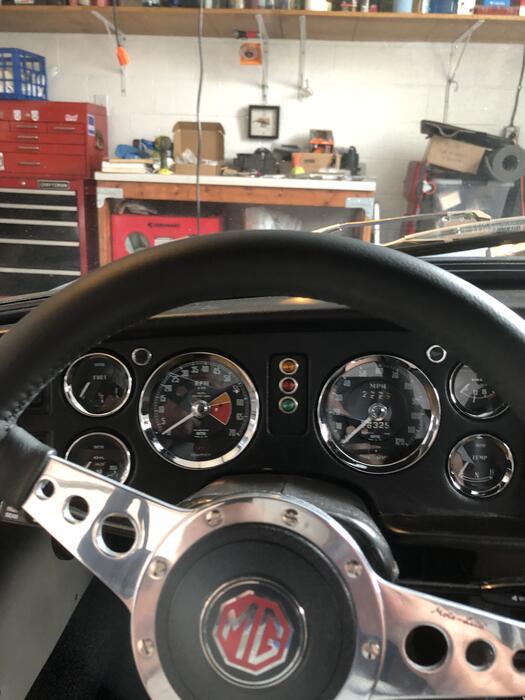
I decided I wanted to back date the gauges to real chrome bezel MGB gauges while keeping the late style 6 gauge dashboard. I know some people would have used the early style 1963-67 style dash, but converting to one of those is a really major undertaking and they are hard to find in restorable condition. By mixing the earlier large tach and speedo gauges with the later 6 gauge style dash I could get the best of both. I really like the look of the older style gauges with the classic British lettering and markings. The original dash was totally shot due to sun exposure so I began searching for a replacement. I located one on ebay for $75 that had only one tiny crack on the right side near the glove box. I purchased the dash, cleaned it thoroughly, repaired the crack and the used interior plastic spray paint. This involved using their primer and the their black dash paint. It turned out looking like a new factory dash and the crack was now invisible. Using Ebay, I then purchased used Smiths speedo and tach from a 1967 MGB, the tach is also electric as earlier MGBs have mechanical tachs. These are the same diameter as the late style 1977-1980 gauges. The tach was sent out to Nissonger for conversion to negative ground and they updated the tach signal pickup to be more accurate and reliable. I also purchased really nice used fuel, temperature, and oil pressure gauges from Ebay. These were from a 1974 MGB and were cleaned and refurbished with new bezels and glass. Lastly, I purchase a new Smiths voltmeter to be used in place of the original clock which I did not want.
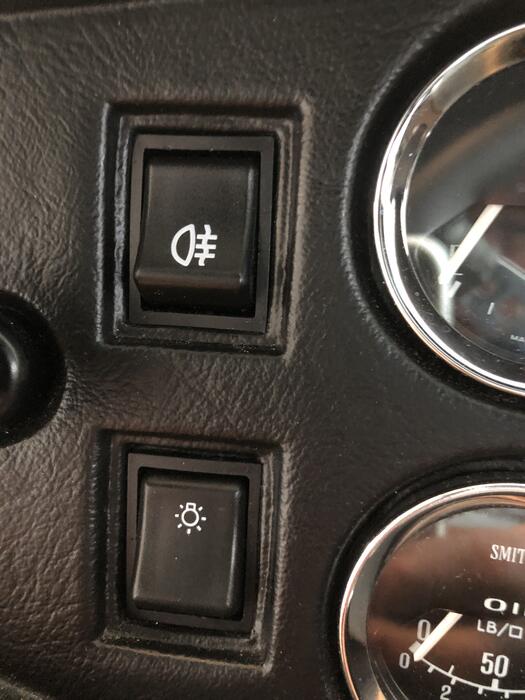
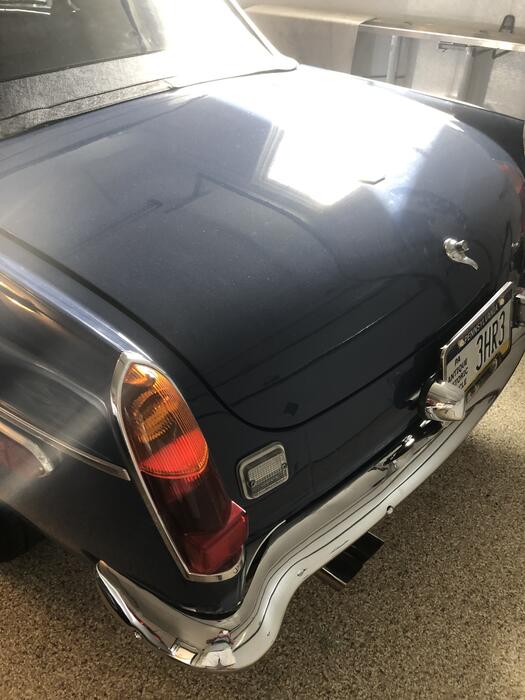
The harness was installed with the hardest part being the installation of the dash board part. Getting all those wires through the hole in the firewall into the interior was a real pain. The switches on the later style dash can be a real pain and are fragile. I sourced new hazard and heater fan switches. The headlight master switch was originally on a column switch which I did not like, also the horn was on the wiper/washer stalk which is not a good place in my opinion. I decided to back date my steering column to the 1975 configuration. This style fits the later body shell but has a horn mounted in the center of the steering wheel as is the norm. At this point I moved the headlight switch to the lower left hand dash position. To do this I bought a headlight switch from ebay - a Lucas SPB601 6GA3 - which is used on mark 4 Mini Coopers. This fit the dash opening and looks very similar to the factory switches. I also added a fog light switch in the spot where there is usually a blank and added the needed wiring for future use. I also back dated some small items such as the turn signal indicators to the 1973-75 style that have chrome trim and look much nicer that the late style indicators. I also removed the dash indicators for the brake failure , ignition, etc which looked tacky. I replaced those with the chrome trimmed, round indicator lights from a 1974 MGB. I had to make a plastic panel to fit these into the recess in the dash but it came out looking much better than the factory ones which always looked cheap and cheesy to me. Lastly I updated the headlights with a premade headlight wiring & relay harness to eliminate the problems with running the headlight power through the switches. I also added a set a set of euro style Lucas Halogen headlights, backed dated early MGB taillights and front turn/park signals, and LED taillight & brake light bulbs which are way brighter and safer than the factory bulbs. Overall it looks great and functions with no problems.
I decided I wanted to back date the gauges to real chrome bezel MGB gauges while keeping the late style 6 gauge dashboard. I know some people would have used the early style 1963-67 style dash, but converting to one of those is a really major undertaking and they are hard to find in restorable condition. By mixing the earlier large tach and speedo gauges with the later 6 gauge style dash I could get the best of both. I really like the look of the older style gauges with the classic British lettering and markings. The original dash was totally shot due to sun exposure so I began searching for a replacement. I located one on ebay for $75 that had only one tiny crack on the right side near the glove box. I purchased the dash, cleaned it thoroughly, repaired the crack and the used interior plastic spray paint. This involved using their primer and the their black dash paint. It turned out looking like a new factory dash and the crack was now invisible. Using Ebay, I then purchased used Smiths speedo and tach from a 1967 MGB, the tach is also electric as earlier MGBs have mechanical tachs. These are the same diameter as the late style 1977-1980 gauges. The tach was sent out to Nissonger for conversion to negative ground and they updated the tach signal pickup to be more accurate and reliable. I also purchased really nice used fuel, temperature, and oil pressure gauges from Ebay. These were from a 1974 MGB and were cleaned and refurbished with new bezels and glass. Lastly, I purchase a new Smiths voltmeter to be used in place of the original clock which I did not want.
The harness was installed with the hardest part being the installation of the dash board part. Getting all those wires through the hole in the firewall into the interior was a real pain. The switches on the later style dash can be a real pain and are fragile. I sourced new hazard and heater fan switches. The headlight master switch was originally on a column switch which I did not like, also the horn was on the wiper/washer stalk which is not a good place in my opinion. I decided to back date my steering column to the 1975 configuration. This style fits the later body shell but has a horn mounted in the center of the steering wheel as is the norm. At this point I moved the headlight switch to the lower left hand dash position. To do this I bought a headlight switch from ebay - a Lucas SPB601 6GA3 - which is used on mark 4 Mini Coopers. This fit the dash opening and looks very similar to the factory switches. I also added a fog light switch in the spot where there is usually a blank and added the needed wiring for future use. I also back dated some small items such as the turn signal indicators to the 1973-75 style that have chrome trim and look much nicer that the late style indicators. I also removed the dash indicators for the brake failure , ignition, etc which looked tacky. I replaced those with the chrome trimmed, round indicator lights from a 1974 MGB. I had to make a plastic panel to fit these into the recess in the dash but it came out looking much better than the factory ones which always looked cheap and cheesy to me. Lastly I updated the headlights with a premade headlight wiring & relay harness to eliminate the problems with running the headlight power through the switches. I also added a set a set of euro style Lucas Halogen headlights, backed dated early MGB taillights and front turn/park signals, and LED taillight & brake light bulbs which are way brighter and safer than the factory bulbs. Overall it looks great and functions with no problems.
IMG-4686 (1)
IMG-4687
IMG-4689
IMG-4690
Member Comments on Journal Entry: My Abingdon Edition MGB - Part 4 - Dash, Gauges & Electrical ↵
No comments have been posted yet...
Want to leave a comment or ask the owner a question?
Sign in or register a new account — it's free




Want to leave a comment or ask the owner a question?
Sign in or register a new account — it's free